After nearly two decades in the interior design industry — and years sourcing fabrics, overseeing custom upholstery, and specifying everything from drapery hardware to decorative hardware — I can tell you that few things generate more client questions than pillow inserts. Which fill is best? Why does a feather occasionally poke through? Is "down-proof" actually a thing? And what is it about a well-placed, beautifully filled pillow that makes a room feel finished?
Let me break it all down for you — because the insert inside your pillow matters far more than most people realize.
First, Let's Talk About Feather Migration
If you have ever reached for a throw pillow and felt a quill poking through the fabric, you are not alone — and your pillow is not defective.
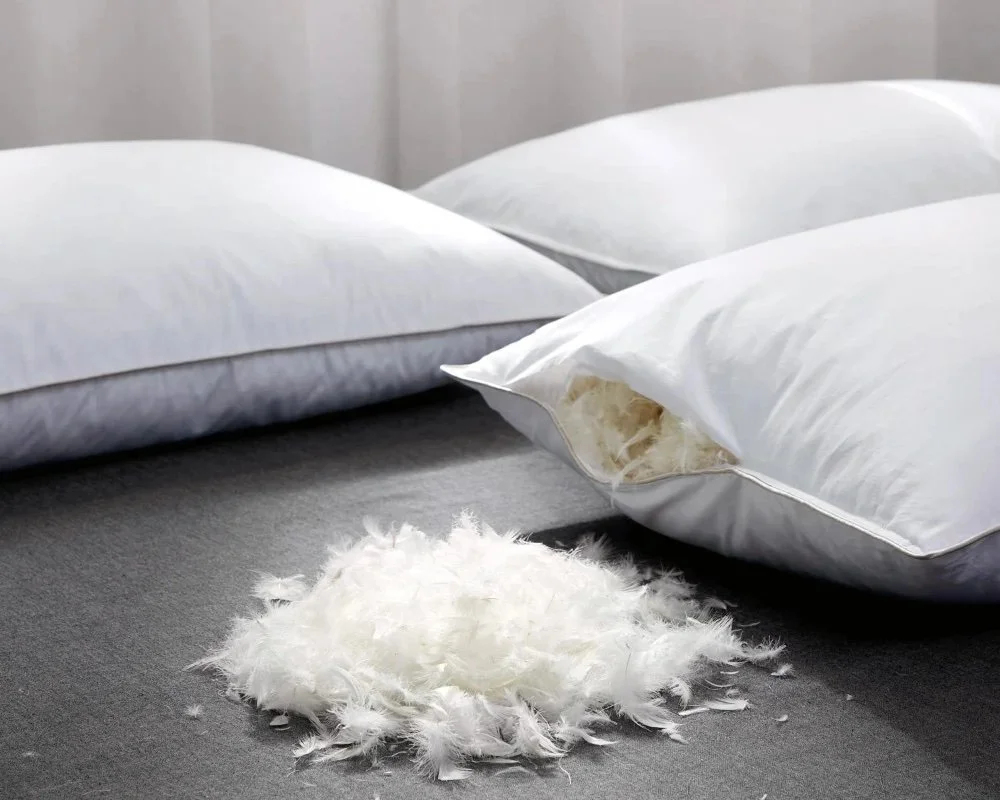
What you are experiencing is called feather migration, and it is one of the most misunderstood characteristics of natural-fill pillows. Here is the honest industry truth: there is no such thing as a completely and permanently "down-proof" fabric. The term "down-proof" describes a construction standard — typically a tightly woven cotton with a thread count engineered to minimize migration — but it is not an absolute guarantee. Even the most rigorously constructed ticking will occasionally allow a quill to work its way through over time.
This is not a flaw in the fabric, and it is not a flaw in your pillow. It is simply the nature of natural fill, in the same way that your finest down duvet or your favorite down vest may occasionally do the same thing. The sharper, more rigid quills of feather fill (as opposed to the soft, wispy clusters of pure down) are particularly prone to finding their way through weave openings, especially as the ticking softens and relaxes with use.
The fix is simple: regular fluffing redistributes the fill and significantly reduces migration. If a quill does work through, resist the urge to pull it from the outside — that widens the weave opening and invites more to follow. Instead, gently push it back through from the inside of the ticking. Problem solved.
Understanding Your Insert Options
Not all pillow inserts are created equal, and choosing the right fill for the right application is something I think about on every project. Here is how I evaluate the options:
Feather/Down Blend (the designer's standard)
This is the category most designers default to for decorative throw pillows and sofa cushions, and for good reason. A blend of feathers and down gives you the structure to hold a pillow's shape — including that coveted "karate chop" center crease you see in editorial interiors — while the down component adds softness and a natural self-fluffing quality.
Blends are typically expressed as ratios: 95/5, 90/10, 75/25, and so on (feather to down). The higher the down percentage, the softer and more expensive the insert. For most decorative throw pillows, a 90/10 or 95/5 blend is the practical sweet spot — structured enough to hold a shape, accessible in price, and beautifully tactile.
The trade-off: higher feather content means a higher likelihood of occasional quill migration. This is simply the cost of the natural luxury, and it is one every designer and client should understand going in.
Pure Down
Pure down — the soft undercoat clusters from ducks or geese, with no feather quills — is the most luxurious and expensive insert option. It is exceptionally soft, lightweight, and breathable, and it holds its loft up to three times longer than synthetic alternatives.
The catch: pure down is very soft, which means pillows filled with it tend to be squishier and may not hold a structured shape as well as a feather-blend insert. It is better suited to sleeping pillows and deeply upholstered cushions than to decorative throw pillows where form and structure are part of the design intent. On the plus side: no quills, no migration.
Down Alternative (Synthetic)
Down alternative inserts are filled with polyester microfiber engineered to mimic the feel of natural down. They have come a long way — high-quality versions are genuinely soft, hold their shape well, and are significantly more durable over heavy use than earlier generations.
The advantages are real: they are hypoallergenic, machine washable, and entirely free of quill migration concerns. They are also a strong choice for high-traffic spaces, children's rooms, or clients with sensitivities. Some premium synthetic options (including the micro-denier fills used by quality suppliers) are genuinely difficult to distinguish from natural down by touch.
The trade-off: they are not breathable in the way natural fill is, and they tend to have a slightly more "bouncy" rather than "melting" quality. For a certain type of luxurious, sink-in sofa pillow, natural fill still wins.
Polyfill
Standard polyester fiberfill — the most economical option, widely available, easy to care for, and entirely hypoallergenic. Polyfill inserts are a practical choice for outdoor furniture, high-wear areas, or anywhere budget is the primary constraint.
They hold their shape well and require minimal maintenance, but they tend to feel firmer and less plush than natural or synthetic-down alternatives, and they do not have the natural drape and conforming quality that makes a sofa pillow feel truly inviting.
Sizing: The Rule Designers Always Follow
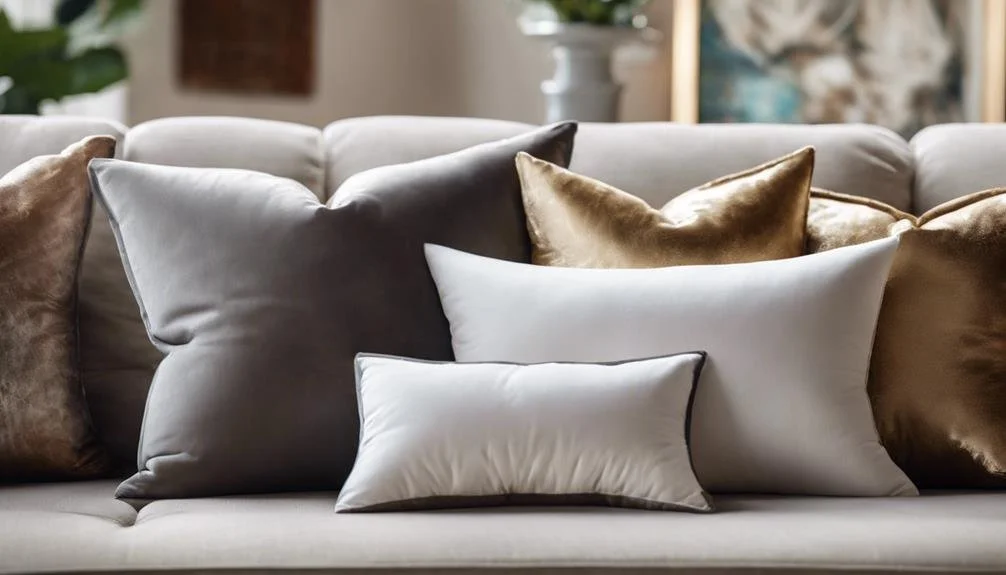
Regardless of which fill you choose, there is one universal rule: always size up. A pillow insert should be 1 to 2 inches larger than the pillow cover. This prevents the dreaded saggy-corner look, keeps the pillow looking full and structured, and ensures the cover lays properly without pulling at the seams. A 20x20 cover takes a 22x22 insert. It seems counterintuitive, but this is one of the details that separates a professionally finished room from one that just misses.
What I Source for My Clients: The Perfect Pillow
For decorative throw pillows in my residential projects, I consistently turn to a US-based manufacturer whose product I have come to think of simply as the Perfect Pillow. Available in virtually any size or shape and made to order, what sets it apart starts with the fill itself — a thoughtfully engineered blend of feather and poly silk that gives you the natural drape and softness of down fill combined with the resilience and shape-retention of a quality synthetic. The result is a pillow that feels luxurious without being floppy, and holds its structure without feeling stiff.
What I particularly appreciate — and what I rarely find in standard off-the-shelf inserts — is the attention to the corners. The Perfect Pillow is fully filled into every corner, which means no sad, deflated points peeking out from your pillow cover. It sounds like a small thing until you have lived with the alternative.
The fill level is also customizable, and this is where I get a little specific with my orders. I almost always request a heavy fill — more stuffing than the standard — because it gives pillows that maximum sink-in quality while still holding enough structure to look intentional on a sofa. It is the difference between a pillow that looks styled and one that looks lived-in in the best possible way.
This is a trade resource I have relied on for years — they understand the needs of the design industry, and their product quality is consistent. When a client invests in beautiful fabric and custom workroom labor, the insert should be equally considered. If you are working with me on a project, this is what you are getting.The Bottom Line
The insert is the infrastructure of your pillow. Get it right and your pillows look full, feel luxurious, and hold their shape for years. Get it wrong and even the most beautiful cover will disappoint.
If you have questions about what fill is right for your specific project — whether you are re-covering existing cushions, sourcing new throw pillows, or working through a full upholstery renovation — I am always happy to talk through the options. This is one of those details that is easy to get right when you know what to look for.